

Making Sense of HSAs and FSAs
January 25, 2026
With family health insurance premiums rising 297 percent since 2000, averaging over $25,000 annually, some employees feel the squeeze. Deductibles, too, have jumped nearly 50 percent over the last decade, further increasing out-of-pocket expenses. In this environment, understanding and using Health Savings Accounts (HSAs) and Flexible Spending Accounts (FSAs) can help families take more control of their healthcare finances.1
What Are HSAs and FSAs?
If you have an HSA, you must also be enrolled in a high-deductible health plan (HDHP). You contribute to the account, and your employer can also choose to contribute. Funds roll over from year to year.
FSAs are usually employer-sponsored accounts. You contribute pretax dollars through payroll deductions. However, the funds must typically be used within the plan year unless your employer offers a grace period or limited rollover.
Both accounts allow you to use pretax dollars to pay for qualified medical expenses, such as copays, prescriptions, or over-the-counter medications. The one that may be best for you can depend on many factors.
Key Differences Between HSAs and FSAs
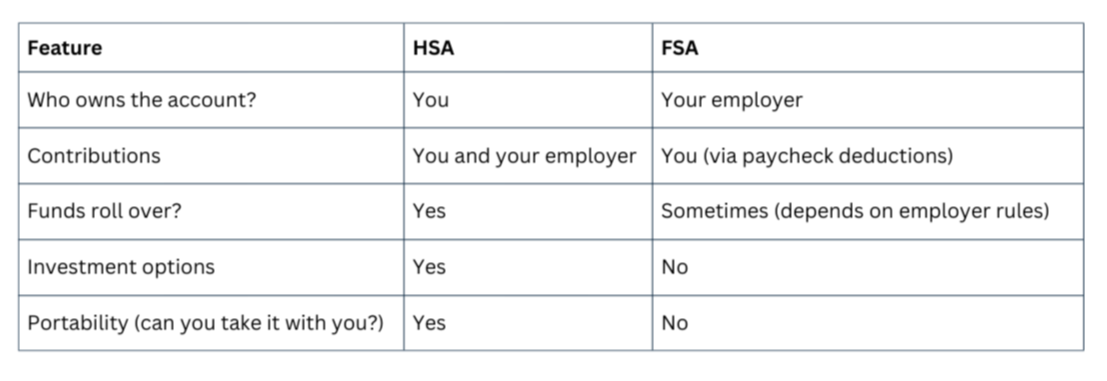 Contribution Limits:
 Contribution Limits:
Why These Accounts Matter More Than Ever
Employers are also increasingly shifting healthcare costs to workers through narrower provider networks, more prior authorizations, and tiered drug pricing systems. That’s where HSAs and FSAs come in. By allowing workers to set aside pretax money, these accounts help manage healthcare costs and create a strategy for expected and unexpected expenses.
Remember that if you spend your HSA funds for non-qualified expenses before age 65, you may be required to pay ordinary income tax and a 20 percent penalty. After age 65, non-qualified expenses are taxed as ordinary income taxes on HSA funds, and no penalty applies. HSA contributions are exempt from federal income tax but not from state taxes in certain states.
Real-Life Scenarios Where HSAs and FSAs Help
Job Change: Moving to a high-deductible plan may make you eligible for and your HSA funds remain yours even if you switch employers or retire, making it a flexible long-term tool.
Chronic Illness Diagnosis: Copays, prescriptions, and specialist visits add up quickly. An HSA or FSA can manage the blow, and an HSA with investment options that are available with some plans.
Caring for Aging Parents: From prescriptions to home health aides, caregiving costs can be significant. FSAs can help cover some expenses. For those with HDHPs, an HSA provides a long-term strategy for health-related caregiving costs.
Other HSA/FSA Tips
- Use online calculators to see what might work for you.
- Prepare for known medical expenses to use funds strategically.
- Monitor your balances online and review your list of eligible expenses.
- If you have an HSA, see if there is an investment option associated with the account.
Remember: during any qualifying life event, like marriage, a new child, or a job change, review your options because these events may allow you to enroll in or adjust your benefits outside Open Enrollment.
Final Thoughts
1. MoneyGeek, April 29, 2025.
2. Kaiser Permanente, June 2, 2025.
3. IRS, May 29, 2025.